The Dominican blowout has a method behind the name, and the method is the point. It is a wash, a roller set, and a high-skill blow-dry, finished in a particular sequence developed in Dominican salons, that leaves textured hair very smooth, straight, and full of movement without a chemical straightener. People in Chesterfield ask for it by name, sometimes meaning any good blowout. The comparison below separates it from its close relatives, because the differences decide which service you should actually book.
Embellish Hair Studio offers blowouts and treatments and smoothing among its services, so the honest question is not which service is best in general, but which one fits your hair, your week, and how long you need the result to last.
Side by side: the real options
| Feature | Dominican blowout | Standard salon blowout | Silk press | Smoothing / keratin treatment |
|---|---|---|---|---|
| Core method | Deep wash, roller set to stretch and dry, then round-brush blow-dry in sections, sometimes a light flat iron finish | Wash, then blow-dry with a round brush directly, usually no roller set stage | Wash and blow-dry, then detailed flat iron work in small sections for a pressed, silky finish | Chemical coating applied and heat-sealed into the hair, changing how it behaves for months |
| Chemical change | None; it is a styling method | None | None | Yes; a coating treatment, not a relaxer, that gradually washes out |
| Typical result | Smooth, straight, bouncy, with body and movement | Smooth and styled, volume depending on the cut | Very sleek, flat, high-shine finish | Smoother, faster-drying hair that is easier to style straight |
| How long it lasts | About a week or more for many people, until washing, heavy sweat, or humidity resets it | A few days, depending on hair and weather | One to two weeks for many people, until washing or moisture reverts it | Around three months, fading gradually |
| Best for | Curly and coily hair wanting a straight, moving style with no chemical commitment | Any hair type wanting a polished finish for a few days or an event | Natural hair wanting the sleekest possible pressed result | Frizzy or thick hair wanting easier styling through a whole season |
| Main caution | Heat is involved; frequency and temperature matter for hair health | Shortest lifespan of the group | The most flat iron passes, so heat discipline matters most | Wash rules and specific aftercare apply afterward |
The sequence, and why the rollers matter
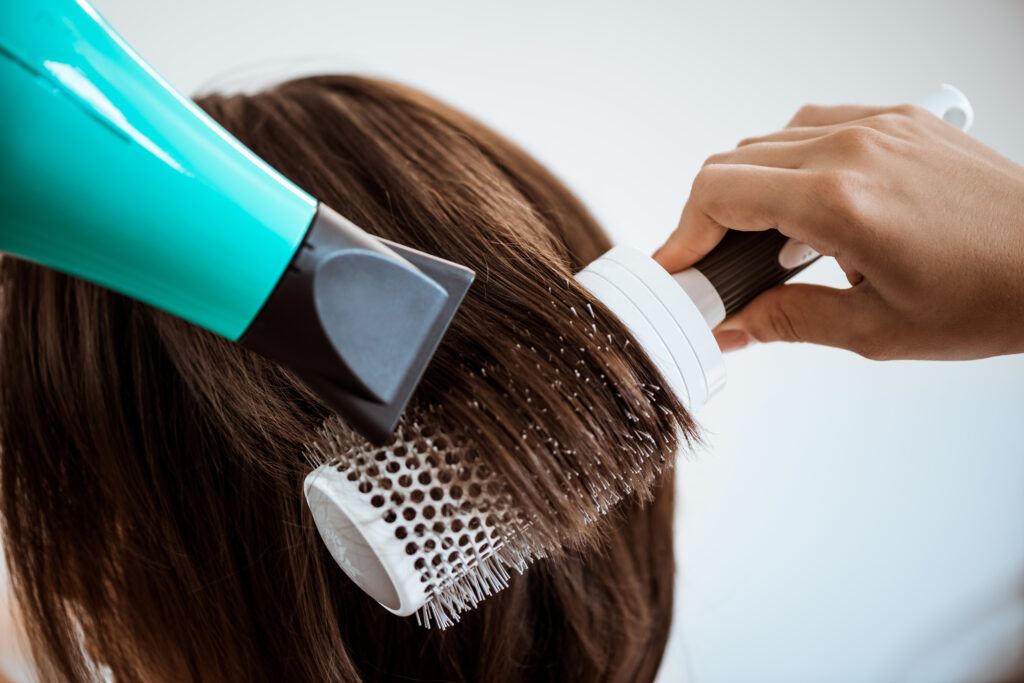
The roller set is what people skip when they imitate the style at home, and it is doing real work. Rollers stretch the hair and begin drying it in a smooth, taut shape, so the blow-dryer that follows is refining an already-straightened foundation instead of fighting the full curl pattern with heat alone. That is part of why the method can produce its signature combination: straight, but not flat. The hair has been persuaded in stages rather than pressed in one aggressive step.
A thorough wash and deep conditioning come first, since the style shows everything and dry hair will not finish smooth. Some stylists finish with a few flat iron passes on the ends or roots only; others keep it dryer-only. Either way, the result reverts fully at the next wash, which is the service's great advantage: no commitment, no growing out, and your curls return when you wash them.
Making it last the week
Longevity is humidity management. Wrap the hair at night or gather it smoothly and cover it with a satin or silk scarf, which preserves the straight shape and reduces friction. Keep showers steamy only with the hair covered and up. In South Carolina summer humidity, expect the roots and hairline to soften first, and plan touch-ups there rather than re-ironing the whole head, which stacks unnecessary heat. Dry shampoo at the roots extends the style between washes for many people. Sweat-heavy workouts and pool days shorten any blowout's life; that is physics, not a failed appointment.
Choosing honestly
Choose the Dominican blowout when you want maximum smoothness and movement from a styling service, and you are happy for it to last until you wash. Choose a silk press when sleek and flat is the specific look. Choose a standard blowout for a quick polish on hair that already dries fairly straight. Choose a smoothing treatment when the goal is not one good week but an easier season. A consultation at Embellish, with your real wash habits and heat tolerance on the table, will sort those faster than any advertisement.
Common questions
Does a Dominican blowout damage hair?
It uses significant heat, so technique and frequency matter. Done by a skilled stylist at sensible intervals, with conditioned hair and heat discipline, most people wear it without damage; weekly high-heat styling of any kind adds up.
Will my curls come back after a Dominican blowout?
Yes. It is a styling method with no chemical change, so your natural pattern returns fully at the next wash. That reversibility is the main reason people choose it.
How is it different from a silk press?
The Dominican method relies on a roller set and round-brush blow-drying for a smooth, bouncy result. A silk press leans on detailed flat iron work for a flatter, sleeker finish.
Photos in this guide are representative stock images.
← All guides from Embellish Hair Studio← Back to Embellish Hair Studio